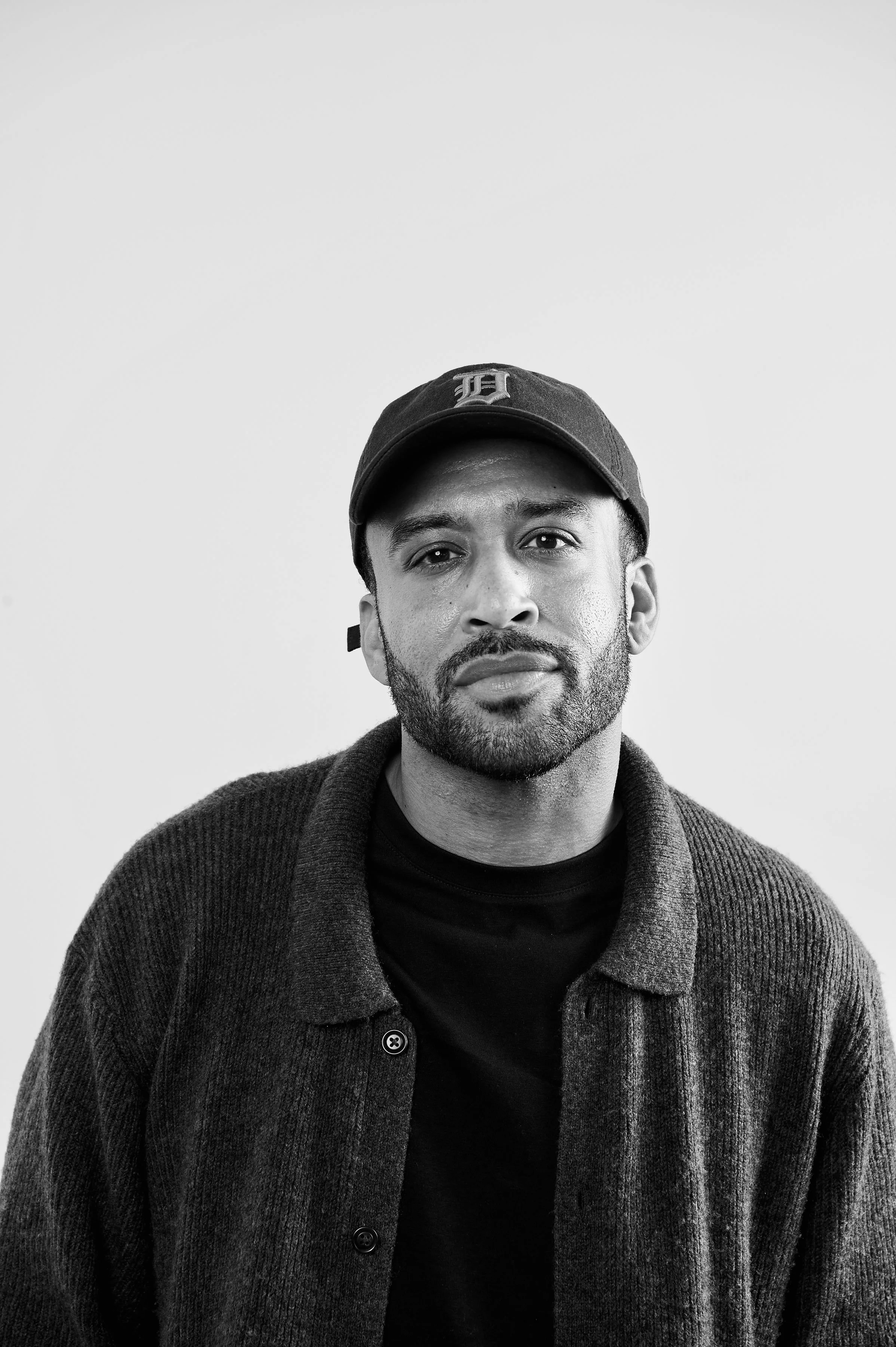
An award-winning writer + director whose work spans film, television development, and cultural storytelling. His debut feature CURTIS won Best Narrative Feature at the American Black Film Festival and the Audience Award at the Atlanta Film Festival. Bailey reflects on story as a way of seeing and how that perspective shapes the way brands, artists, and institutions communicate today.

A conversation with Christopher Bailey, Founder, Blueprint 7

CURTIS
Feature Film [Trailer]

CURTIS
Feature Film [Trailer]

When did you first realize story mattered? Not just as a tool, but as a way of seeing the world?

I think it started with music, specifically Tupac.
I was really young when he was alive, so I didn’t really find his music until later. What struck me wasn’t just the lyrics, but the way he told stories from different viewpoints, different characters, different sides of the same truth. The way he stood for something.
It taught me something early on: no matter how removed people seem from one another, there’s a shared emotional thread underneath it all. Music showed me the power of point of view. It showed me that how you see the world, and how you choose to frame it, can help other people understand themselves.
That idea has stayed with me. It’s probably the single biggest reason I became a storyteller.

You’ve worked in Hollywood, inside development rooms and on sets. What’s one lesson film teaches that no business school does?

Collaboration around something bigger than yourself.
On most film sets, people aren’t there because they’re getting rich. It’s a very blue-collar environment. There’s years of development, long hours, and a lot of people giving more than they’ll ever get back financially. That only happens when the work means something to them.
I think that’s the real lesson: people will give their best when they feel part of something larger than themselves. That applies to film, and it applies to companies too. You can’t build great culture on paychecks alone. The best teams need belief, belief in the story they’re helping bring to life.

You talk about “zooming in and zooming out” as a way of seeing. What does that mean to you and why does it matter?

If you want to truly understand anything, a company, a brand, a community, you have to start by getting close. You can’t study it from a distance. You have to step inside the world, talk to the people who live there, and become a participant rather than an observer.
Only after that can you step back and see the larger picture, how the pieces fit together, what actually matters, and why it matters. That zoom-in, zoom-out rhythm is how you move from surface-level understanding to real insight.
And once you have that clarity, you’re finally able to communicate it to people who aren’t as familiar with the world you just came from.

Blueprint 7 didn’t just happen overnight. Why did it need to exist now? What felt missing in how brands communicate?

For me, it’s less about ideas and more about execution.
Having an idea is easy. Carrying it all the way through, without losing its intention, is the hard part. That’s what filmmaking taught me. You’re responsible not just for the concept, but for every choice that brings it to life.
Blueprint 7 exists to protect that continuity. We develop the story and we see it through to the screen. There’s no handoff where nuance gets diluted. The same thinking that shapes the idea is present in the execution.
That doesn’t mean working alone. It means communicating closely with our partners inside an organization and understanding the process of building the right team around a clear center. 
That’s how I’ve always worked. Blueprint 7 just gives that way of working a structure.

What do most organizations get wrong about “story,” even when they think they’re telling one?

They focus on information instead of a feeling.
Most people don’t remember what they were told, they remember how something made them feel. Story isn’t about delivering facts. It’s about creating an emotional imprint that lasts longer than the moment itself.

Is there a moment in your creative journey you still think about? Something that shifted everything for you?

Running.
I started running during a period when everything felt stuck. Career paused. Life in transition. No clear direction. I’d wake up before sunrise and run about six miles. Every time, the first half was brutal, my body wanted to quit. But somewhere along the way, something would shift. My thoughts would settle. Clarity would come. Ideas I wasn’t even searching for would surface.
By the end, I wasn’t just running, I was locked in.
That runner’s high didn’t last forever, but the practice rewired how I move through life. It taught me patience, resilience, and trust in the process. It showed me that clarity often comes after discomfort.
That mindset shapes how I approach my work now, staying open, staying still, pushing through uncertainty, and keeping perspective on the bigger picture.

So what’s the bigger picture for Blueprint 7?

We want Blueprint 7 to be a signal, like the Bat signal. When people encounter something we’ve made, they feel it before they analyze it. They trust that what they’re about to experience was built with care.
We’re living in a world that overcosumes. Our response is to create work that restores a sense of connection, perspective, and intention. Not content you scroll past, but stories you sit with.
Long-term, the goal is simple: to be of service to ideas that matter, and to help brands, institutions, and creators connect with as many people as possible. We want to play at the highest levels. 
If we’re not aiming to do that, then there’s no point in doing it at all.